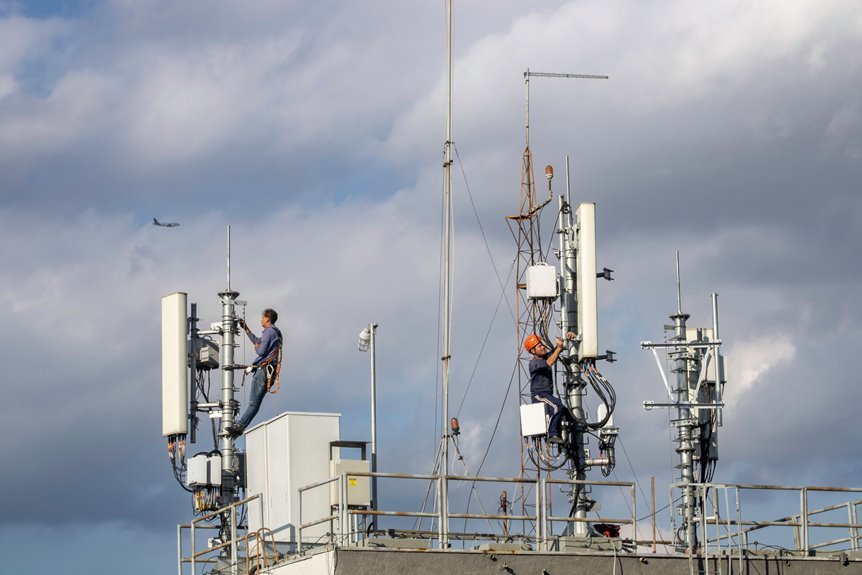
The distributed telecom activity monitoring study integrates multi-regional sensing with standardized telemetry. It aims to harmonize metrics, align timing, and enable scalable anomaly scoring. The approach links telemetry, call data, and load patterns across regions to detect outages, routing inconsistencies, and suspected fraud. Privacy and compliance are treated as core constraints within a scalable architecture. The framework raises questions about governance, cross-border data handling, and the robustness of coordinated detection, inviting careful evaluation of its practical implications.
What Distributed Monitoring Delivers for Telecom Signals
Distributed monitoring delivers a granular view of telecom signals by spatially dispersing measurement assets across the network. It enables consistent telemetry normalization across segments and devices, reducing variance in readings. Data is synthesized into standardized metrics, supporting objective anomaly scoring. The approach promotes transparent verification, scalable insight, and disciplined fault detection, while preserving operational flexibility for evolving architectures and independent decision-making.
How We Link Telemetry, Calls, and Load Across Regions
To link telemetry, calls, and load across regions, a unified data integration layer aligns timing, identifiers, and measurement units from disparate sources, enabling cross-domain correlations and regional normalization.
Telemetry correlation supports cross region load profiling and call path topology mapping, while regional telemetry governance ensures consistent baselines.
The approach yields synchronized insights, scalable monitoring, and actionable, freedom-friendly operational clarity across borders.
Detecting Outages, Routing Anomalies, and Fraud at Scale
Detecting outages, routing anomalies, and fraud at scale requires a disciplined, data-driven approach that differentiates transient fluctuations from systemic faults.
The study applies outage taxonomy to categorize incidents, leverages anomaly signaling to flag deviations, and monitors routing latency for performance shifts.
Fraud indicators are evaluated through pattern analysis, ensuring scalable, auditable detection while preserving operational clarity and resilience.
Privacy, Compliance, and Scalable Architecture for 5 Numbers
The discussion analyzes privacy, compliance, and scalable architecture for five-number telecom data, focusing on how data minimization, access controls, and auditability balance operational needs with regulatory demands.
Privacy safeguards and compliance frameworks guide implementation, while scalable architecture for 5 numbers supports distributed monitoring delivers for telecom signals.
Linking telemetry across regions enables detecting outages and fraud at scale with clarity and precision.
Frequently Asked Questions
How Is Data Anonymization Implemented for the Five Numbers?
Data anonymization for the five numbers employs hashing and tokenization to obscure identifiers, preserving analytical utility while removing traceability; latency benchmarks evaluate the processing impact, ensuring privacy safeguards do not degrade measurement accuracy or data usefulness.
What Are the Latency Benchmarks for Real-Time Telemetry Streams?
Latency benchmarks for real-time telemetry streams vary by system but typically aim for sub-100-millisecond end-to-end latency; data minimization and privacy preserving practices constrain path length, buffering, and processing without compromising timely insights.
How Is Anomaly Detection Performance Measured Across Regions?
Anomaly detection performance across regions is measured via anomaly timing, regional metrics, and data anonymization effectiveness, with cross border governance ensuring comparability; methodology emphasizes consistent thresholds, cross-region calibration, and transparent reporting for freedom-minded stakeholders.
What Governance Model Governs Cross-Border Data Transfers?
Cross-border data transfers are governed by multilayered frameworks emphasizing data minimization and data provenance, with compliance via contractual, regulatory, and technical controls; governance balances freedom with accountability, ensuring lawful transfers, transparency, and auditable, consistent data handling practices.
How Are User-Access Controls Enforced for Researchers?
Access controls are enforced through role-based and attribute-based policies, defining data permissions for researchers. Privacy frameworks guide least-privilege access, while security auditing records activity, ensuring accountability and transparent enforcement within a compliant, auditable environment.
Conclusion
The study presents a rigorous, cross-regional framework for telecom monitoring that harmonizes telemetry, calls, and load data to reveal outages, routing irregularities, and fraud at scale. By dispersing sensing assets and standardizing metrics, it enables auditable governance and privacy-preserving analytics while sustaining lawful compliance. The evidence supports the theory that distributed, normalized measurement improves fault detection without centralized bottlenecks, offering a resilient blueprint for scalable telecom oversight and transparent, data-driven decision making.