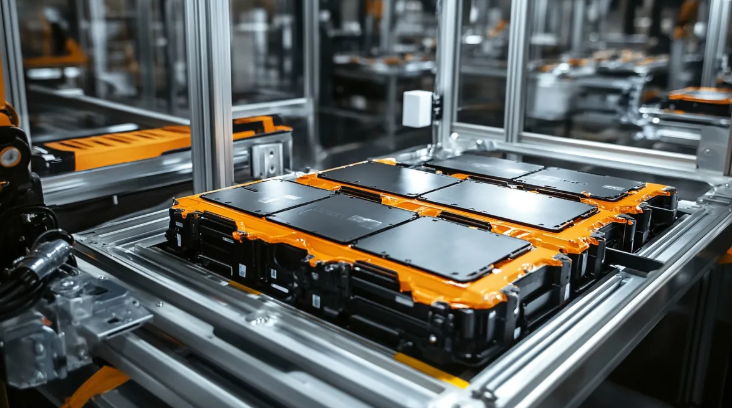
Nowadays, in industrial and medical settings, maintaining consistent quality is essential. Integrated X-ray sources are key to high-precision inspections and accurate diagnostics. These advanced systems combine X-ray tubes, high-voltage generators, and control electronics into compact, efficient units, ensuring stable and reliable performance.
By providing precise and repeatable X-ray output, integrated X ray source manufacturers support quality control across multiple sectors, including food safety, industrial manufacturing, medical imaging, security, and scientific research. Their solutions simplify installation, reduce maintenance, and enhance safety, making them indispensable for organizations that prioritize accuracy, efficiency, and regulatory compliance in critical inspection and diagnostic processes.
Understanding Integrated X‑Ray Sources
An integrated X-ray source unites the critical components required for X-ray generation in a single unit. Traditional X-ray setups often rely on separate tubes, high-voltage generators, and control systems. This can introduce variability, increase installation complexity, and make maintenance more challenging. By contrast, integrated systems provide consistent output, simplified installation, and minimal downtime, which is essential for quality control processes where precision and repeatability are paramount.
These systems are designed with compactness and robustness in mind. This ensures they can be seamlessly integrated into production lines, laboratory equipment, or medical imaging devices. The consistent voltage supply and stable X-ray emission help detect even minor defects or anomalies, ensuring that products or samples meet strict quality standards.
Applications Across Industries
1. Food Industry
In food processing, safety and quality are non-negotiable. Contaminants such as bone fragments, plastics, or glass must be detected before products reach consumers. Integrated X-ray sources and the accompanying generator for X-ray machines allow producers to scan items rapidly and accurately. This reduces risk, minimizes waste, and ensures regulatory compliance.
2. Industrial Manufacturing
Industries such as aerospace, automotive, and electronics rely heavily on non-destructive testing (NDT). High-precision inspections of components like metal castings, circuit boards, and composite materials are possible thanks to X-ray systems equipped with high-voltage generators. Integrated X-ray source manufacturers provide units capable of supporting high-throughput inspections without sacrificing accuracy. This is particularly important in quality control, where missed defects can lead to costly recalls or safety issues.
3. Medical Diagnostics
Medical imaging requires not only clarity but also safety. High-voltage generators in integrated X-ray systems allow rapid scans with minimal radiation exposure. From bone densitometry to dental imaging, these units enable precise diagnosis while maintaining patient safety. The stability and performance offered by integrated X ray source manufacturers ensure hospitals and clinics can trust their equipment for routine and advanced procedures.
4. Security and Inspection
Security screening at airports, logistics centers, and border crossings depends on X-ray systems to detect contraband, explosives, or prohibited items. Compact, reliable X-ray sources coupled with high-voltage generators provide the consistent imaging quality necessary for rapid, high-throughput inspections. By delivering repeatable results, these systems help maintain safety while reducing human error.
5. Scientific and Analytical Applications
Laboratories and research institutions rely on X-ray spectrometry and analytical imaging for material characterization. Accuracy and repeatability are essential. Here, the role of integrated X-ray source manufacturers is critical, as their products provide stable, reproducible X-ray emissions for precise measurements and consistent research results.
See also: How Technology Improves Operational Efficiency
The Role of High-Voltage Generators in Quality Control
High-voltage generators are the backbone of every X-ray system. They convert low-voltage input into the high-voltage power necessary to generate X-rays. Without reliable high-voltage generators, even the best X-ray tubes would fail to produce consistent results. These generators ensure uniform X-ray intensity, which is crucial for detecting small defects, subtle contaminations, or structural inconsistencies.
Modern generators are engineered to provide adjustable voltage outputs, allowing operators to tailor X-ray penetration to the material or product being inspected. This flexibility enhances quality control processes, ensuring that even products with varying thickness or density can be analyzed accurately.
Advantages of Working With Integrated X‑Ray Source Manufacturers
1. Consistency and Reliability
By integrating the X-ray tube, generator, and control electronics, these manufacturers ensure consistent performance. This reliability is essential in quality control, where even minor fluctuations in X-ray output can compromise results.
2. Simplified Maintenance
Integrated units reduce the complexity of setup and maintenance. Fewer connections and compact designs mean fewer points of failure and quicker troubleshooting. For production environments or busy laboratories, this translates to higher uptime and reduced operational costs.
3. Customizable Solutions
Every industry and application has unique requirements. Reputable integrated X-ray source manufacturers offer customizable solutions tailored to OEM needs. Whether it is high-throughput food inspection, precision industrial NDT, or sensitive medical imaging, these units can be engineered to meet specific operational demands.
4. Space-Saving Design
Compact integrated X-ray systems take up less space than traditional setups. This is particularly valuable in constrained laboratory environments or production lines, allowing for flexible installation and integration with other equipment.
5. Safety and Compliance
Manufacturers design these systems with safety features such as radiation shielding, cooling systems, and automated controls. This ensures compliance with regulatory standards and minimizes risk to operators and patients.
Emerging Trends in X-Ray Technology
Integrated X-ray sources continue to evolve with advances in materials, electronics, and automation. Newer systems are lighter, more energy-efficient, and capable of producing higher-resolution imaging. The integration of AI-driven inspection software is also becoming more common, further enhancing the role of X-ray systems in automated quality control. Generator for X ray machines is being optimized for faster start-up times, lower energy consumption, and extended operational lifespans, all of which improve overall productivity.
Conclusion
High-quality inspection and diagnostic processes rely heavily on integrated X ray source manufacturers and their high-voltage generator solutions. These systems provide stable, precise, and repeatable X-ray output, supporting rigorous quality control across food production, industrial manufacturing, medical imaging, security screening, and scientific research. By delivering consistent performance, reliability, and safety, integrated X-ray sources ensure that products and materials meet the highest standards.
If you are looking for a trusted provider of innovative solutions, VJ X‑Ray is a global leader in developing integrated X-ray sources and high-voltage generators for diverse applications. They provide compact, high-performance units for industrial, medical, security, and analytical use. Their solutions feature reliable X-ray output, easy integration, and customizable designs to meet OEM requirements. With facilities in New York and Suzhou, VJ X‑Ray empowers partners worldwide with advanced, efficient, and safe X-ray technology.