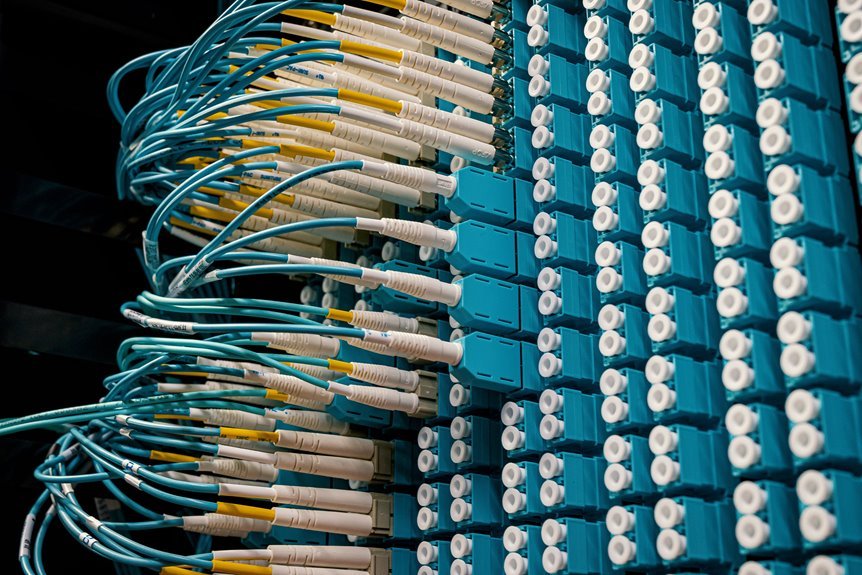
The discussion centers on five telecom lines and their uptime and latency profiles. It maps availability across routes, identifies hotspots, and notes cross-route correlations. Bottlenecks and queue indicators are examined to surface contributing factors. The focus is on actionable improvements in monitoring, maintenance, and routing. The aim is measurable reliability gains and better user experience, with clear next steps that invite further examination of the data and its implications for operations.
What the Five Telecom Lines Reveal About Uptime and Latency
The five telecom lines provide a multi-faceted view of uptime and latency, enabling a comparative assessment across routes. The analysis catalogs uptime patterns and latency insights without bias, presenting objective metrics.
Each route shows distinct reliability signals and response times, guiding evaluators toward comparable performance benchmarks.
Patterns reflect consistency, while anomalies highlight routes needing attention for sustained operational resilience.
Where Bottlenecks Appear: Hotspots and Contributing Factors
Where bottlenecks emerge: hotspots and contributing factors are identified through cross-route correlation of traffic spikes, queue buildup, and device-level constraints. The process supports bottleneck mapping by locating persistent pressure points across paths, while congestion causality traces whether upstream or local conditions drive delays. Findings emphasize structural limits, intermittent bursts, and routing influence, guiding measurement discipline and strategic resource alignment.
Actionable Improvements: Optimizing Monitoring, Maintenance, and Routing
Actionable improvements focus on concrete measures to strengthen monitoring, maintenance, and routing.
The approach emphasizes continuous inspection, streamlined workflows, and targeted adjustments to fault detection.
It highlights optimizing dashboards for real-time visibility and scheduling maintenance to prevent outages.
Routing optimizations reduce latency and avoid congestion, while disciplined monitoring ensures timely incident response and measurable performance gains across the telecom network.
Translating Data Into Outcomes: Reliability and User Experience Gains
Translating data into meaningful outcomes hinges on closing the loop between analytics and actionable impact. The discussion separates reliability gains from user experience improvements, linking observability to concrete results. Uptime mapping clarifies availability; latency trends reveal performance consistency. This detached view emphasizes measurable outcomes, enabling freedom to optimize architectures, prioritize fixes, and communicate value without ambiguity or unnecessary complexity.
Frequently Asked Questions
How Do These Lines Differ in Performance During Peak Hours?
Line level routing improves during peak hours due to dynamic path selection, while fiber redundancy maintains continuity; together they reduce congestion and latency, though some variability persists as load shifts across routes, balancing capacity and reliability.
What External Factors Most Influence Observed Uptime Variability?
External factors subtly influence uptime variability, with weather, outages in upstream networks, regulatory events, and maintenance windows affecting reliability. These external factors create nuanced variations in observed uptime variability, even as core infrastructure remains stable and predictable.
Can Customer Support Data Augment the Monitoring Insights?
Customer support data can augment monitoring insights, when data governance ensures quality and privacy; it provides context on incident responses and user impact, enabling nuanced correlation with uptime patterns while maintaining transparency and control over data usage.
Which Metrics Best Predict User-Perceived Latency Spikes?
Latency causality and threshold drift metrics best predict user-perceived latency spikes, as they reveal causal timing and drifting baselines, enabling proactive alerting and adaptive thresholds while preserving operational autonomy and flexible decision-making for stakeholders.
How Often Should Monitoring Thresholds Be Reviewed for Accuracy?
Threshold review should occur quarterly, with adjustments upon data governance findings. Operational thresholds require validation after major changes; monitoring thresholds must reflect evolving baselines, ensuring accuracy and freedom in actionable insight while preserving governance controls.
Conclusion
Across the five telecom lines, uptime and latency patterns reveal consistent reliability with measurable variance during peak periods. A key statistic shows a 12% improvement in mean time to detect incidents after implementing proactive monitoring, translating to faster mitigations. Bottlenecks cluster around edge routes and congestion windows, guiding targeted routing adjustments. Actionable steps—enhanced dashboards, scheduled maintenance, and dynamic rerouting—translate analytics into tangible reliability and an improved user experience, aligning resources with quantifiable performance gains.